

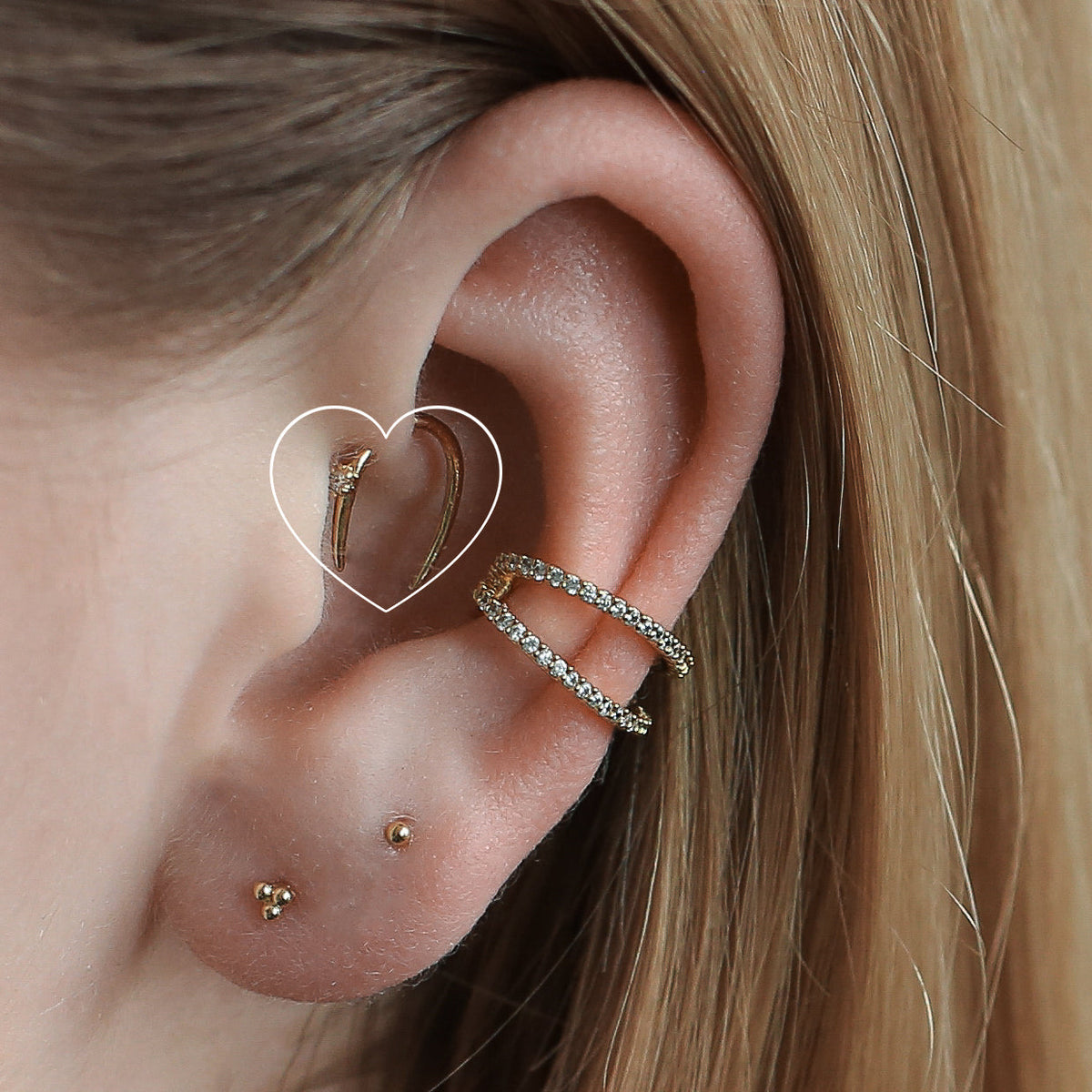
Everything You Need to Know About Daith Piercings
A daith piercing, pronounced "doth", goes through the small fold of cartilage tucked just above your ear canal, where the outer rim of the ear curls inward. It is one of the few piercings where a hoop is the default rather than the upgrade, and a small hoop nestled in that fold is the look that makes people book it.
This guide covers what a daith piercing is, how much it hurts, how long it takes to heal, what gauge and hoop size you need, and which jewelry works in a daith, including whether you can wear a stud.
Daith Piercing Fast Facts
- PLACEMENT: The innermost fold of cartilage, just above the ear canal.
- PAIN LEVEL: 6/10. A sharp, slow push through thick cartilage.
- HEALING TIME: 6 to 12 months.
- GAUGE: 16 gauge (1.2mm).
- HOOP SIZE: 8mm inner diameter for most daith piercings.
- JEWELRY: Cartilage hoops. Clicker and seamless styles are the easiest to live with.
What Is a Daith Piercing?
Look at the inside of your ear, just above the opening of the ear canal. The outer rim of the ear curves inward there and ends in a small, firm fold of cartilage called the crus of the helix. A daith piercing goes through that fold, so the jewelry sits deep inside the ear rather than along its edge, and a hoop in it looks as if it is hugging the entrance to the canal.
The position is what makes a daith distinctive and also what makes it a piercer's piercing. The fold is small, thick, and tucked away, so a piercer usually uses a curved needle and takes their time to line it up. Not every ear has enough of a fold to pierce safely; a reputable piercer will look first and tell you honestly if yours is too small or too shallow, in which case a rook or tragus piercing gives a similar inner-ear look.
You may have read that a daith piercing can help with migraines. There is no reliable evidence that it does, and piercers and doctors do not recommend getting one for that reason. Get a daith because you like how it looks; if migraines are the issue, talk to a healthcare professional.
Does a Daith Piercing Hurt?
A daith piercing rates about a 6 out of 10 for pain, which puts it toward the top end for ear piercings. Pain is personal, but there are two reasons the daith tends to hurt more than a helix or lobe. The cartilage in that fold is thick and dense, and the awkward angle means the needle moves through it more slowly than usual: a daith can take 6 to 9 seconds to pierce, where most ear piercings are over in one. Most people describe it as a sharp, hot pressure rather than a quick pinch, and many find the sound of it more memorable than the pain.
Afterward, the ear feels deep-sore and warm for several days, and chewing or yawning can tug at it a little. Sleeping on that side is the thing that really hurts, so plan on the other side for a while. The tenderness fades over the first couple of weeks, though the piercing is a long way from healed at that point.
If you are nervous, choose a piercer who does a lot of daith piercings and tell them. The placement is fiddly enough that experience makes a real difference to how the appointment goes.
How Long Does a Daith Piercing Take to Heal?
Plan on 6 to 12 months for a daith piercing to heal fully, and don't be surprised if it is closer to the longer end. Thick cartilage with little blood flow heals slowly, and the daith's position works against it: it is hard to see, hard to clean, and easy to knock with earbuds, a phone, or a pillow. It can feel settled after a few months while still being fragile underneath.
A few things make healing easier:
- Leave the starter jewelry in until your piercer confirms the piercing has healed. Daith piercings are usually done with a hoop or a curved barbell; if your piercer fitted a larger ring to allow for swelling, they will swap it for a closer-fitting one during healing once the swelling has gone down.
- Clean it with sterile saline once or twice a day. Because you can't see the fold easily, spray rather than dab, and don't twist or rotate the jewelry.
- Keep earbuds and over-ear headphones off that side for the first few months. Pressure inside the ear is a common trigger for irritation bumps on a daith.
- Sleep on the other side. A travel pillow with a hole in the middle helps if you can't keep off it.
- Go easy on hair products and phone calls on that side, and skip swimming until it has healed.
Once your piercer confirms it has healed, you can change the jewelry yourself, though a daith is one of the harder piercings to reach, so many people have the piercer do the first swap. Our guide to changing piercing jewelry walks through it.
Some redness, tenderness, and clear or whitish crust are normal. Increasing pain, heat, swelling, or yellow or green discharge are not; cartilage infections can become serious, so see a healthcare professional rather than waiting it out.
Daith Piercing Size: What Gauge and Hoop Diameter?
Most daith piercings are done with a 16 gauge needle, which is 1.2mm thick, and the jewelry you wear should match that gauge so the channel doesn't shrink or stretch. Some piercers use 18 gauge (1.0mm); if you are not sure which you have, ask your piercer rather than guessing.
For a hoop, the measurement that matters is the inner diameter. 8mm fits most daith piercings and is the typical reference size. If you don't know yours, have your piercer measure it before you buy. A smaller ear or a shallower fold may take a 6mm hoop, and a deep placement may need 10mm; your piercer can measure the exact distance in a few seconds. A hoop that is too small will press on the fold and irritate it, and one that is too large flops forward and catches, so it is worth getting right.
If you wear a stud in a healed daith, the post length is usually 8mm, because the fold is thicker than most of the ear. Our jewelry sizing guide explains how to measure what you already own.
The Best Daith Jewelry: Hoops, Clickers, and Studs
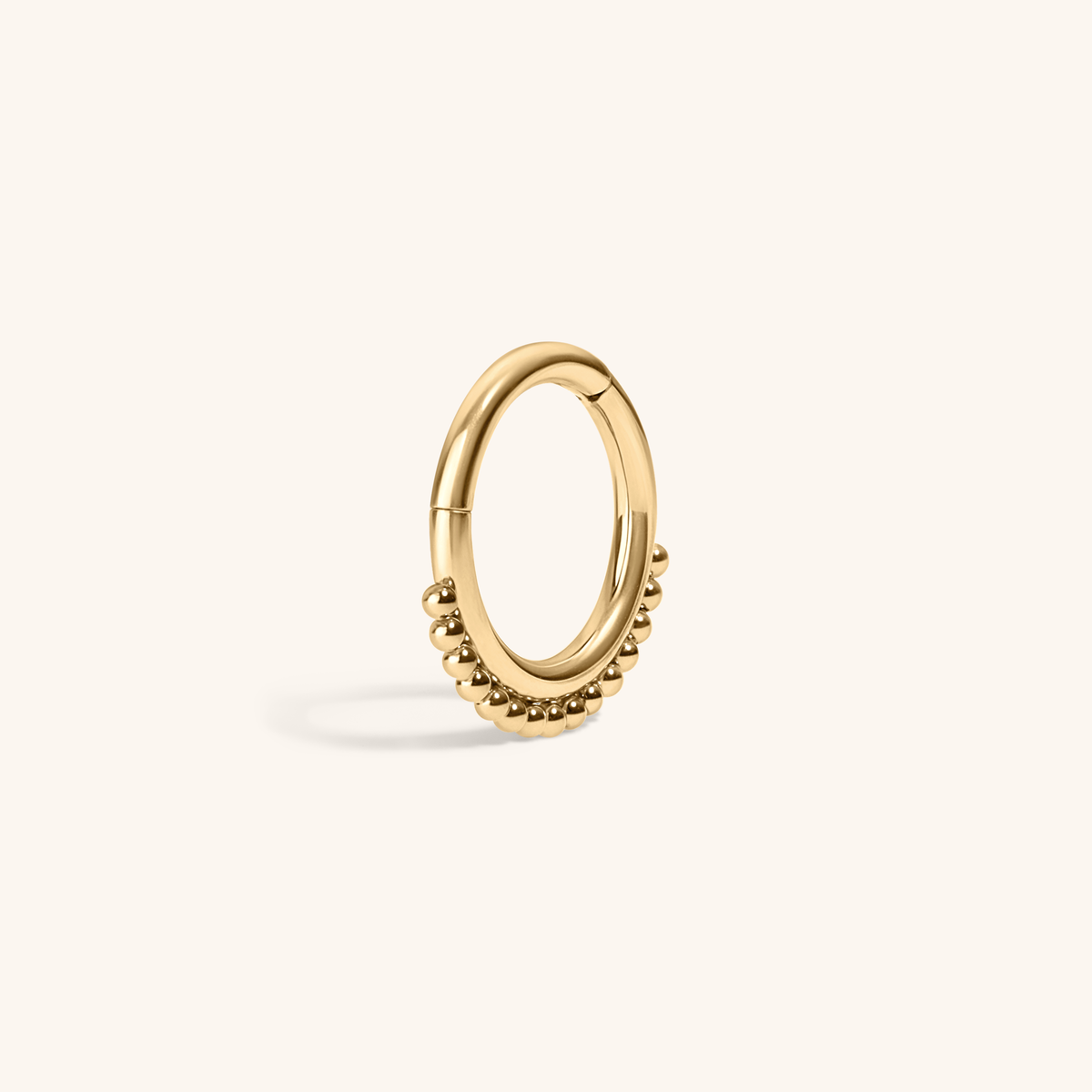
Hoops are the standard daith jewelry, and the piercing is usually done with one. Your piercer chooses the starter piece, and it should stay in until the piercing has healed: a seam or hinge that turns into a healing channel can irritate it, so starter rings are built to keep the join outside the fold. Once healed, a small hoop that follows the curve of the fold is the look most people want from a daith. Three styles are common:
- Clicker hoops have a hinged segment that snaps shut. They are the easiest to put in and take out of a daith, which matters because the fold is awkward to reach.
- Seamless hoops are a continuous ring you twist open sideways. They look the cleanest but take some practice to open and close in a daith.
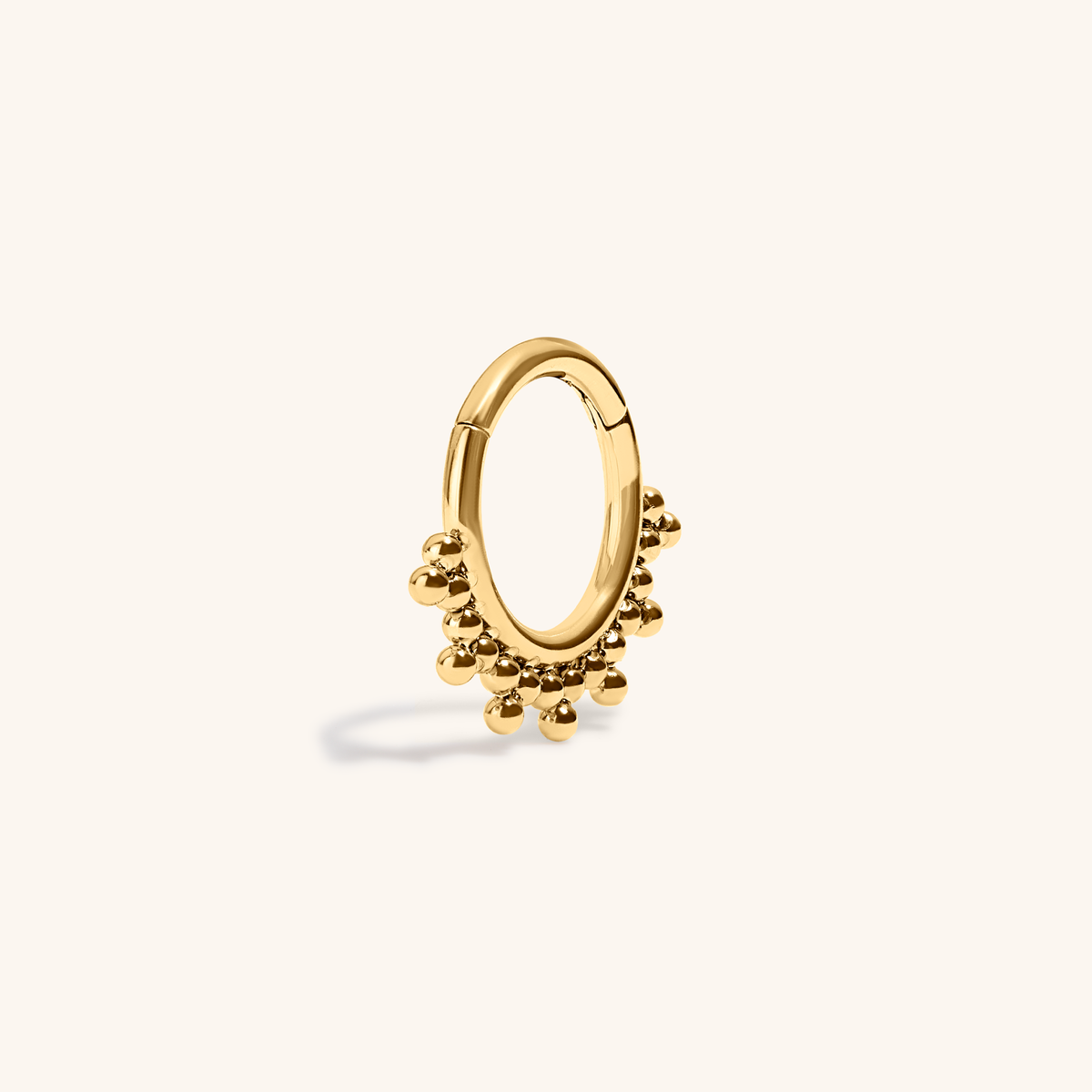
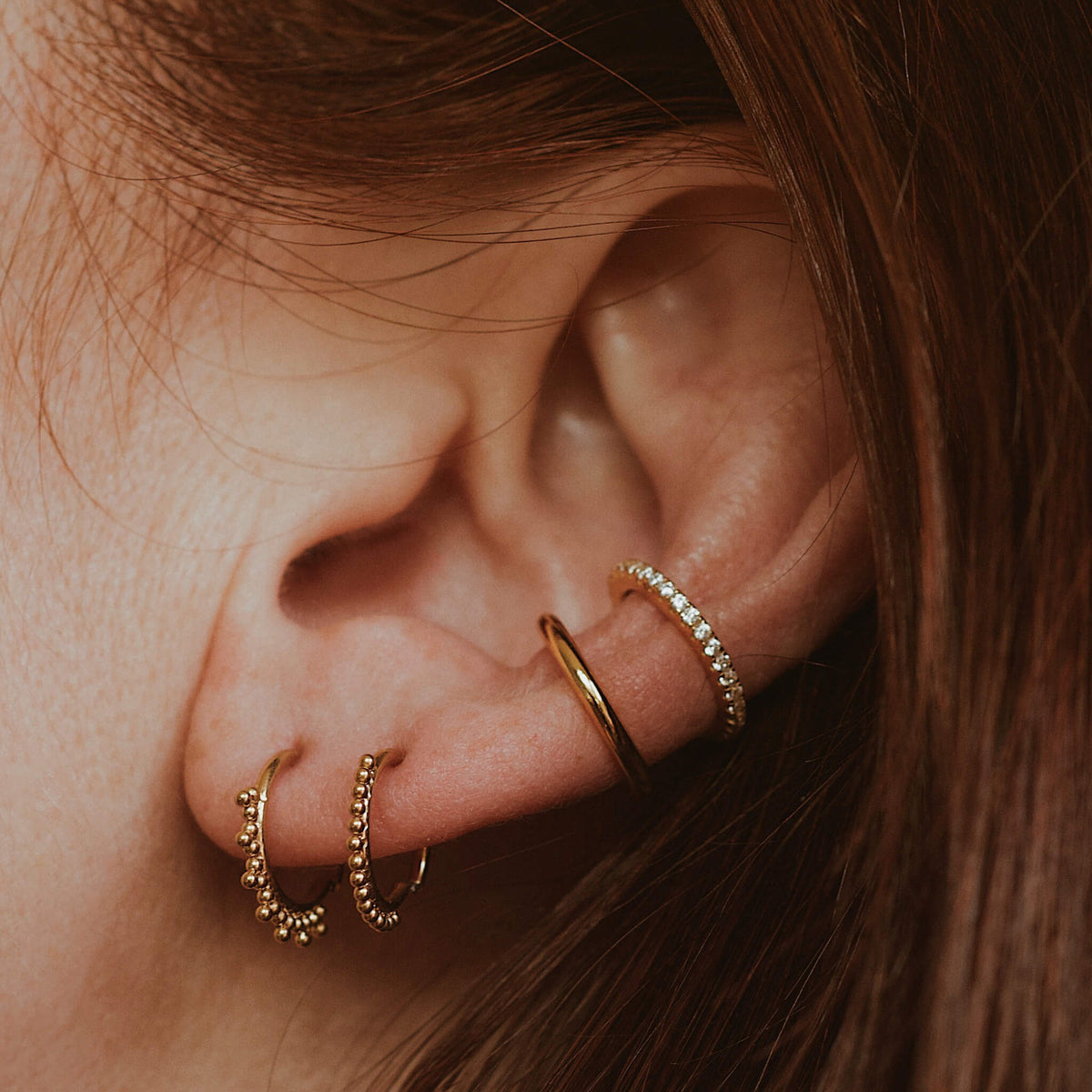
- Beaded or decorated hoops add a crystal or a charm to the front of the ring, which sits at the opening of the ear canal where it catches the light.
Our cartilage hoops come in the 6mm, 8mm, and 10mm inner diameters a daith can take, and everything in our daith collection is sized for the fold.
Can you wear a stud in a daith? Yes, in a healed piercing. A flat back earring with an 8mm post works, and a tiny stud is a quieter look than a hoop. The catch is that the back disc sits deep in the ear, so it is harder to change than a hoop and not every fold has the room. A curved barbell is the other classic daith option: a short curved bar with a ball at each end that follows the fold the way a hoop does, with less movement.
Whichever style you choose once healed, the metal matters as much as the shape. Our daith jewelry is made from medical-grade (ASTM F-136) titanium or solid 14k gold, both hypoallergenic and nickel-free, so you can wear it around the clock, through showers and sleep.
Shop daith piercing jewelry








Daith Piercing Inspiration
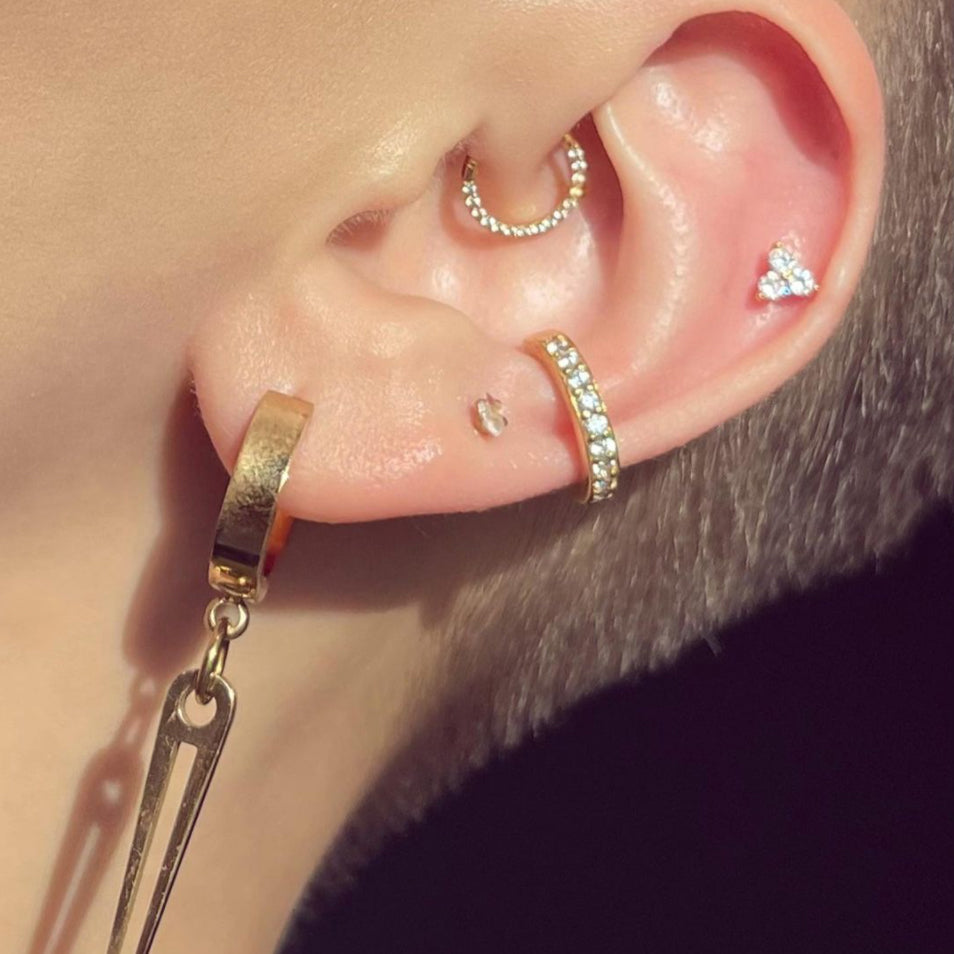
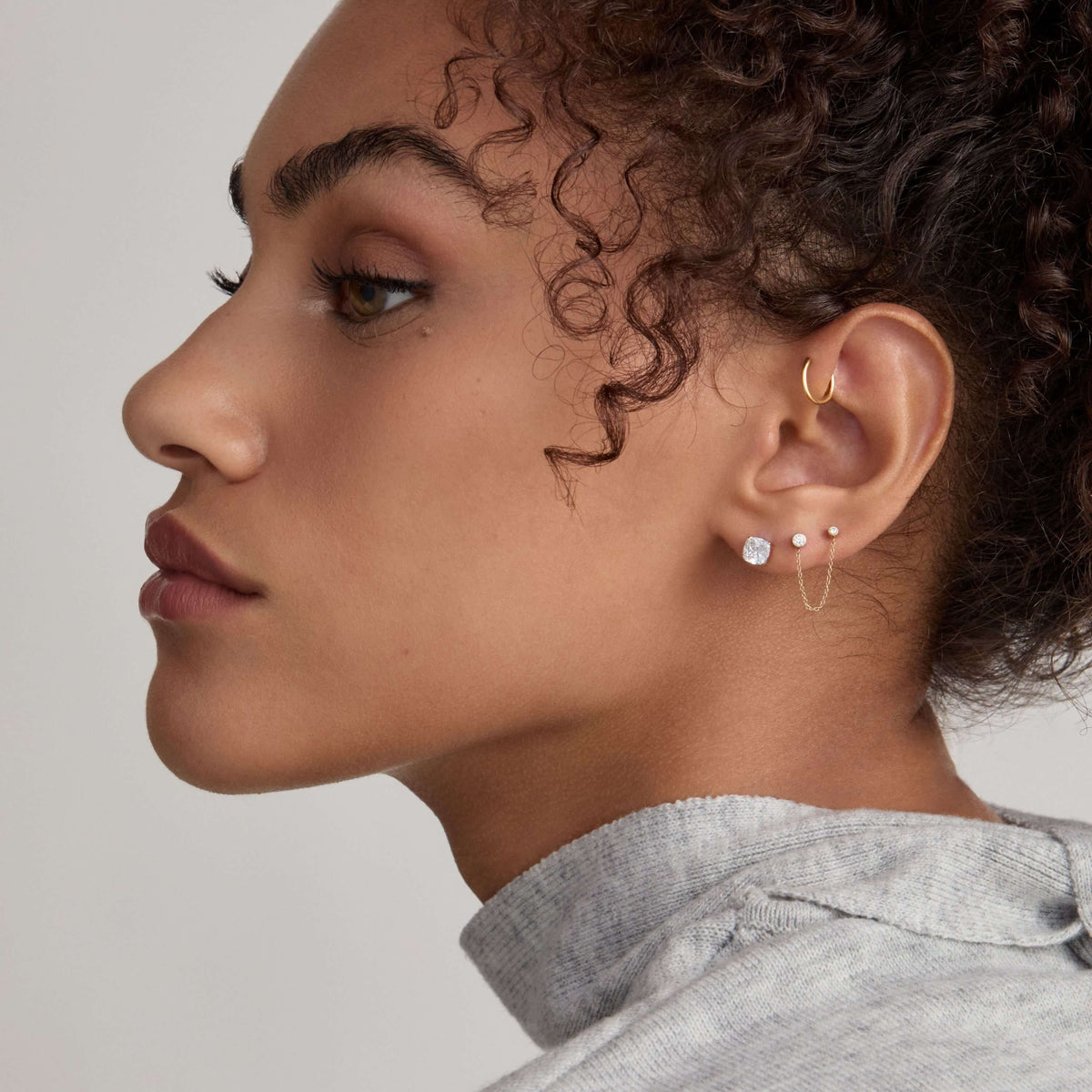
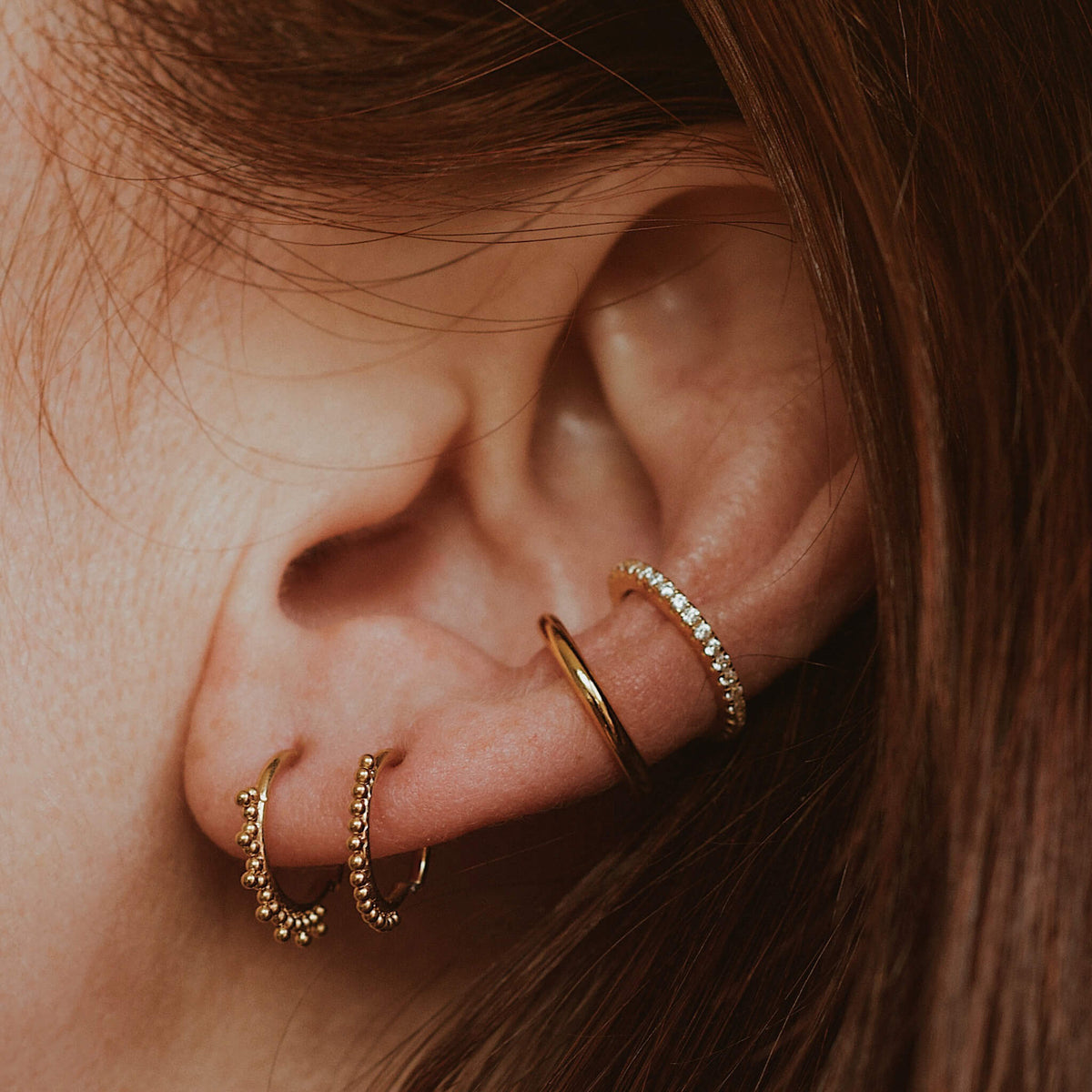
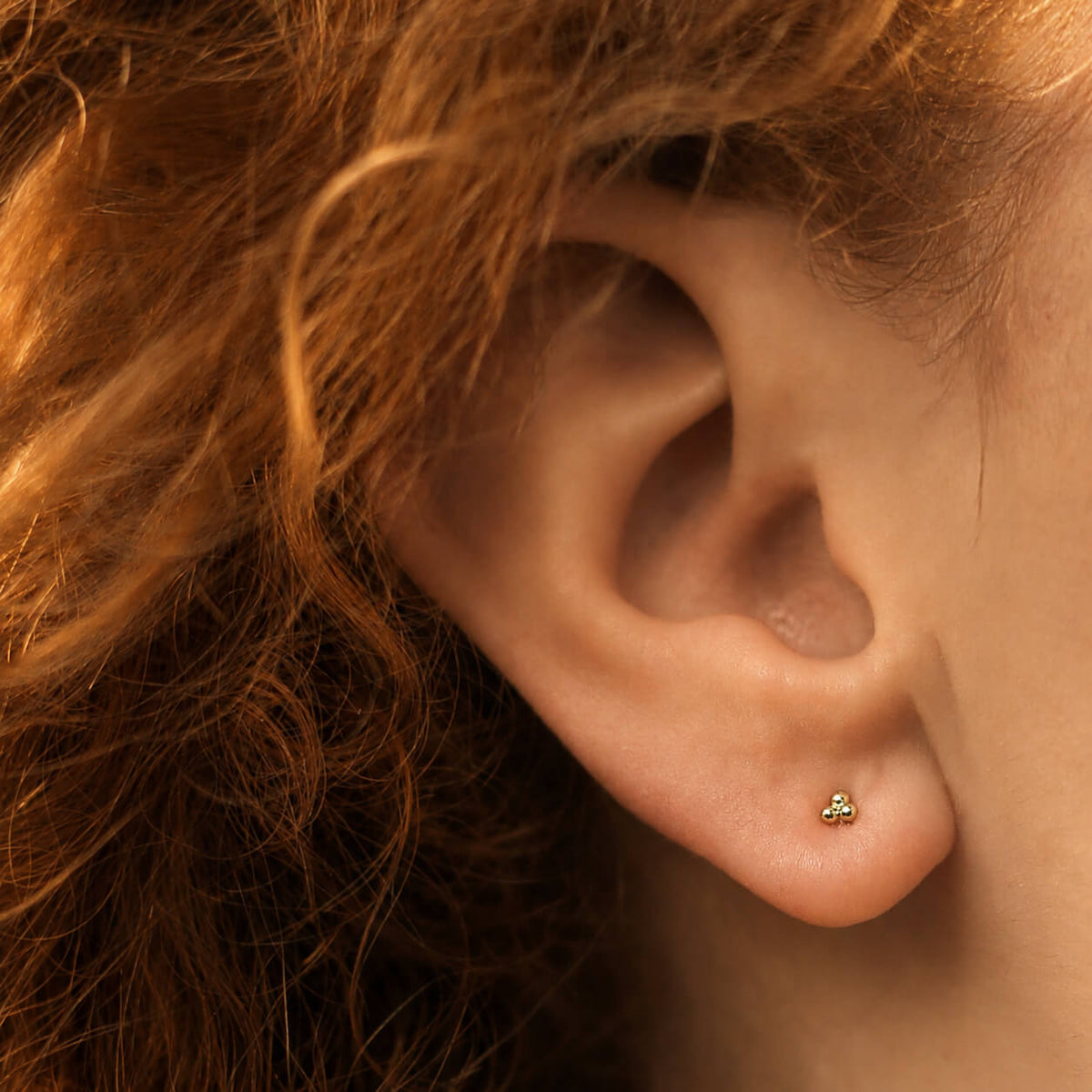
@alexandra_anele in our Crystal Trinity Flat Back Earring and the Cosmic Cartilage Hoop in her daith piercing.
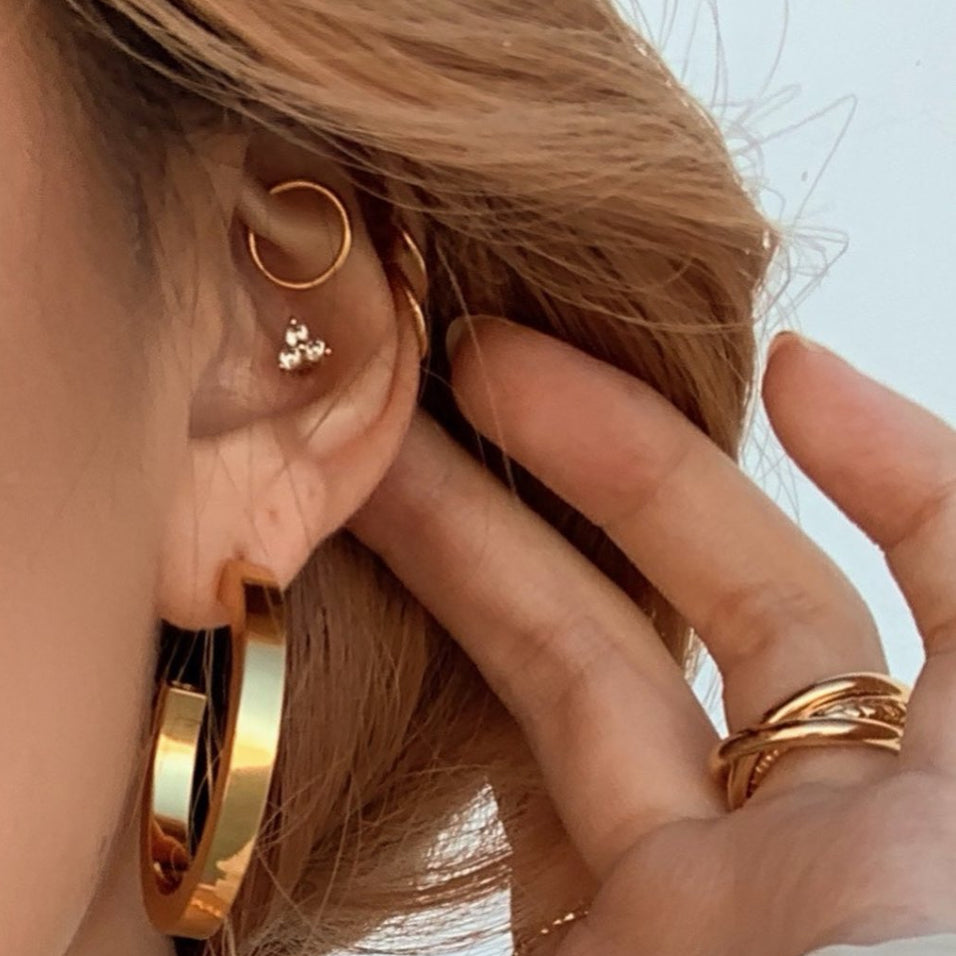
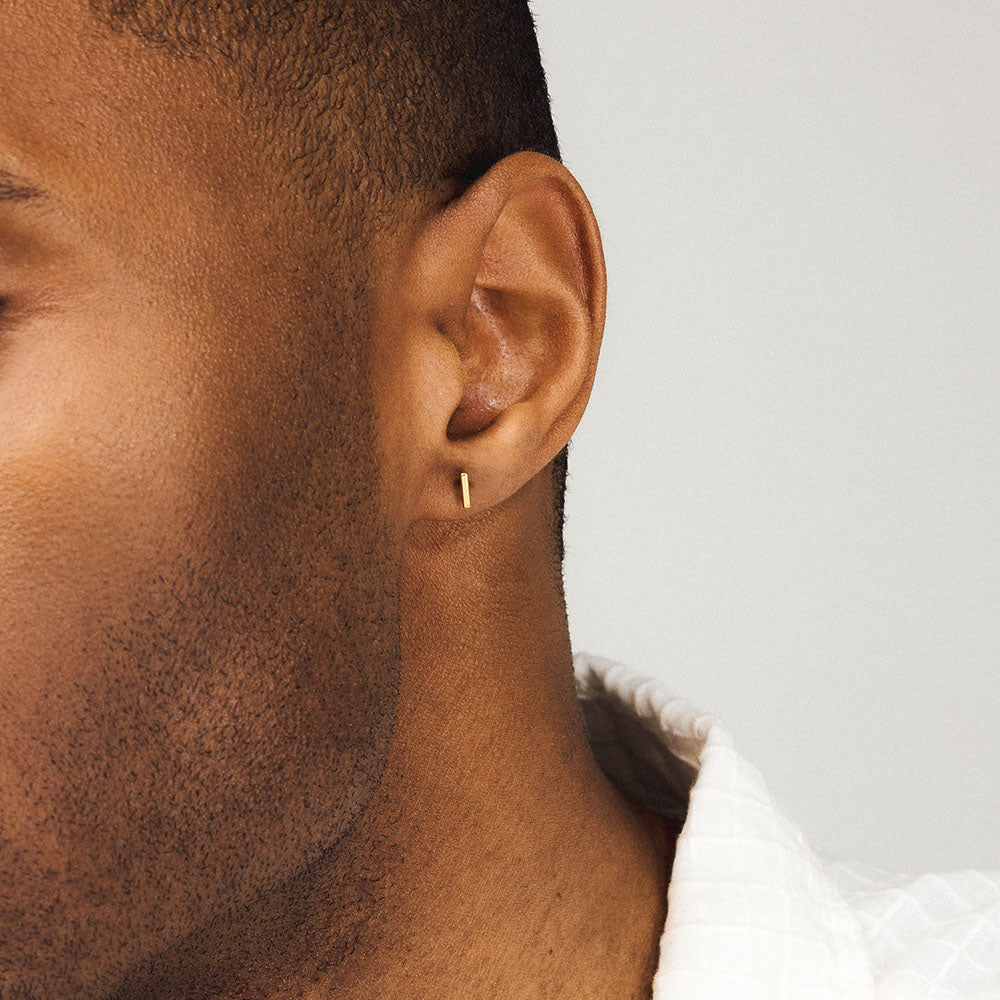
@__twong in our Classic Cartilage Hoop, Crystal Trinity Flat Back, and Architect Hoop

@ohhjuliana in our Crystal Trinity Flat Back, Pave Moon Stud, Little Secret Stud, and Tiny Secret Stud
Keep Reading
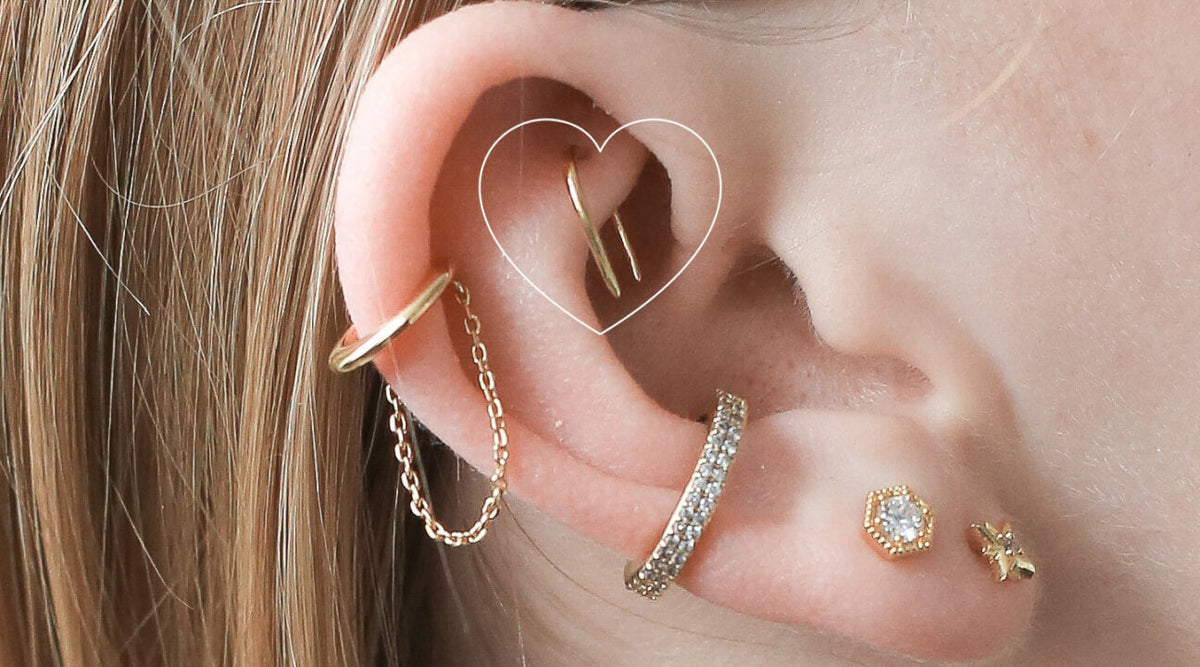
Rook Piercing Guide: Everything You Need to Know
Everything you need to know about rook piercings: pain level, healing time, cost and recommended jewelry.
Read more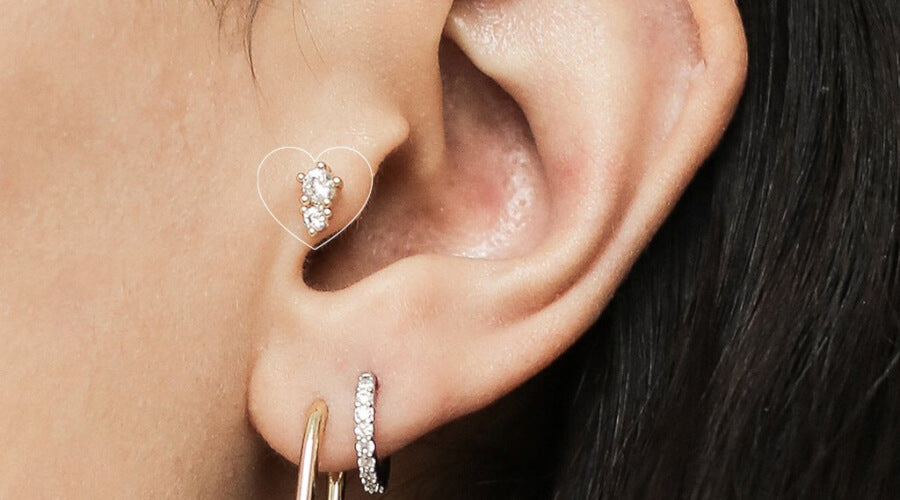
Tragus Piercing Guide: Everything You Need to Know
Everything you need to know about tragus piercings: pain level, healing time, cost and recommended jewelry.
Read more
Helix Piercing Guide: Everything You Need to Know
Everything you need to know about helix piercings: pain level, healing time, cost and recommended jewelry.
Read more
Conch Piercing Guide: Everything You Need to Know
Everything you need to know about conch piercings: pain level, healing time, cost and recommended jewelry.
Read more